The purchasing decision
A wholesale waterproof phone pouch order should begin with a device envelope: phone width, height, thickness and whether a protective case remains fitted. A diagonal screen size is not enough to confirm fit. The closure must have room to operate without trapping the device or compressing a thick camera area.
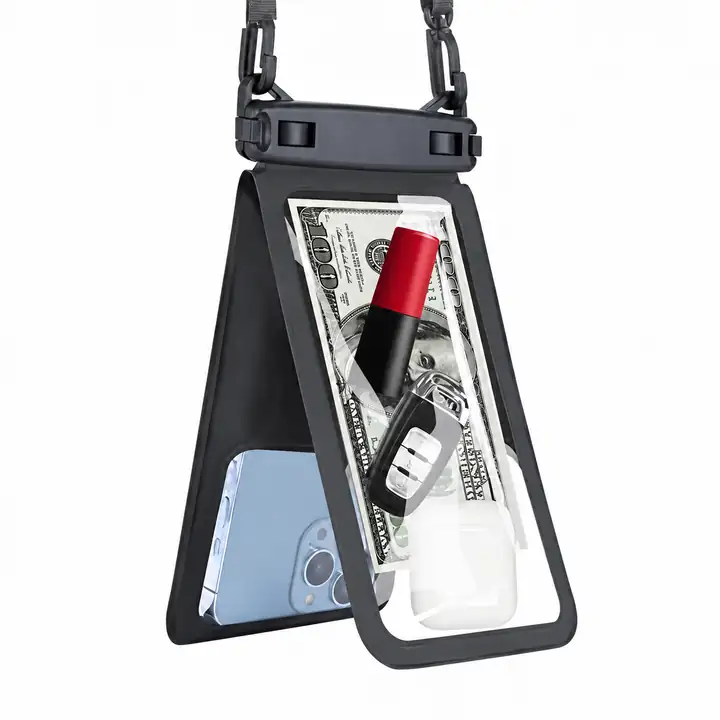
Choose the pouch format around the intended customer. A flat window pouch, a double-compartment design and a camera-dome design solve different access and storage problems. Compare samples with the target devices rather than treating them as cosmetic alternatives. Check the viewing area, camera alignment and lanyard attachments alongside the closure.
For bulk purchasing, agree the inspection method and the information printed on the pack. Model compatibility and water-exposure claims need to match the evaluated sample. Ask the supplier to separate pouch cost, branded packing and any accessory choices so the quote can be compared on a consistent basis.
What to compare before ordering
| Decision | Review with the supplier | Purpose |
|---|---|---|
| Device fit | Use width, height, thickness and case. | Test the complete target device. |
| Format | Compare windows, compartments and camera area. | Match the customer’s access needs. |
| Bulk order | Separate pouch, accessory and pack costs. | Quote one defined configuration. |
Build a line-by-line bulk enquiry
A bulk order is easier to compare when the pouch, lanyard and packaging are separate specification lines. Record model and colour quantities first, then identify artwork and pack variants. Use the same target-device list for every sample so a lower price is not accepted for a different opening, window or accessory configuration.
| Review field | Record | Purpose / question |
|---|---|---|
| Reference | Model link and drawing or sample revision. | Keeps the quotation tied to one construction. |
| Device set | Phone body, case and camera-area dimensions. | Makes the fit review repeatable. |
| Included set | Pouch, lanyard, insert, individual pack and labels. | Separates included parts from optional extras. |
| Acceptance | Fit, closure, interaction and exposure requirements. | Defines what the sample must demonstrate. |
Request sample cost, sample timing, quantity breaks and delivery terms as separate items. For an existing model with your logo, the starting MOQ is 50 pieces; new OEM development starts at 100 pieces. Confirm the specific model and colour allocation in the quotation, then retain the approved sample and pack version for repeat orders.
Compare the product formats and custom order options when turning this worksheet into a purchasing brief.
Include these details in your enquiry
- Target phone envelopes including cases
- Preferred window and compartment layout
- Closure evaluation and intended exposure
- Lanyard, artwork and retail pack requirements
Identify the model and the version of any drawing or artwork. Ask for assumptions, proposed changes, packing details and commercial terms to be shown in the quotation. MOQ, sample cost and production timing are confirmed for the agreed configuration.
Buyer questions
Is screen diagonal a complete fit specification?
No. The overall body, case and camera protrusion also affect fit. Use a device-envelope drawing and actual samples.
Can one sample represent every phone?
Use a defined compatibility set. A sample that fits one phone does not establish compatibility with all devices.
NEXT STEP
Turn the brief into a sample review.
Choose a product reference, mark the changes you need and send your expected quantities and destination market. Our Dongguan team can review the manufacturing options with you.
Discuss this project