
The purchasing decision
A useful seam inspection starts with a map of the bag, not an undefined request for strong welding. Identify the base join, body seams, closure reinforcement and external attachment areas. Mark which joints form the protected compartment and which belong to decorative or storage features. The sample review can then focus on the places that matter to the design.
Inspect the proposed sample for visible gaps, uneven joining, distortion and inconsistent alignment. Review corners and transitions where several layers meet. If the product includes sewn components, establish where stitching is located relative to the protected compartment. Photograph findings against the sample identification so they can be resolved without relying on a verbal description.
Agree the functional evaluation separately from the visual checklist. Define how the bag is closed, whether it is loaded, the exposure conditions and the acceptance criteria. Record how inspected units are selected from a batch and what happens when a defect is found. An attractive seam appearance is useful evidence, but it should not replace the agreed functional evaluation.
What to compare before ordering
| Decision | Review with the supplier | Purpose |
|---|---|---|
| Seam map | Mark joints and compartment boundaries. | Know which joins require functional review. |
| Visual review | Check alignment, corners and transitions. | Record findings against the sample. |
| Functional review | Specify closure, load and exposure. | Use agreed acceptance criteria. |
Map seams before reviewing the finished sample
Use photographs or a simple drawing to number the seams around the body, base and closure. Mark strap anchors and junctions separately: these may bring together more layers than a straight body seam. Inspect comparable locations on each sample rather than selecting only the easiest section to photograph.
| Location | What to record | Follow-up |
|---|---|---|
| Straight seam | Alignment, continuity and surface appearance | Compare with the approved construction reference. |
| Base and corners | Layer transitions, folds and accessible edges | Record any irregularity with a location number. |
| Attachment junction | Anchor placement and reinforcement layout | Review the planned load and agreed inspection method. |
| Finished closure | Correctly closed state and exposure setup | Use a separately agreed test and acceptance criteria. |
Visual inspection is one part of a sample review. A tidy seam photograph cannot demonstrate an immersion rating or load capacity. Agree whether evaluation includes exposure, leakage or load testing, who carries it out and which specimen is used. Retain both the result and the sample revision so a later material or construction change triggers an appropriate review.
Specify shell, seams and closures together for the next stage of your purchasing brief.
Decide whether a seam finding needs clarification, repair or another sample
A useful supplier inspection report ends with a decision for each finding. Give the photograph a location number, identify the affected specimen and describe the observation without guessing its cause. The factory can then respond to the same area of the same revision. Do not combine several seam locations into one photograph labelled “welding problem”.
| Finding to resolve | Information needed | Purchasing action |
|---|---|---|
| The joint boundary is unclear | A marked photograph showing the intended protected compartment and adjoining layers. | Clarify the construction before judging the joint against a requirement. |
| A visible irregularity is accepted or repaired | The approved reference, repair location and effect on the intended evaluation. | Record the disposition; recheck the repaired specimen where required. |
| The material or joint layout changes | The revised drawing and identification of affected seam locations. | Agree which appearance and functional checks must be repeated. |
For wholesale waterproof bags, specify who can approve a repair and whether the inspected specimen is retained. A corrected photo is not a substitute for identifying the corrected unit. If the inspection remains open, keep that status on the order review rather than marking the whole bag approved because other seams look consistent. The agreed exposure or load evaluation remains a separate decision from this visual finding record.
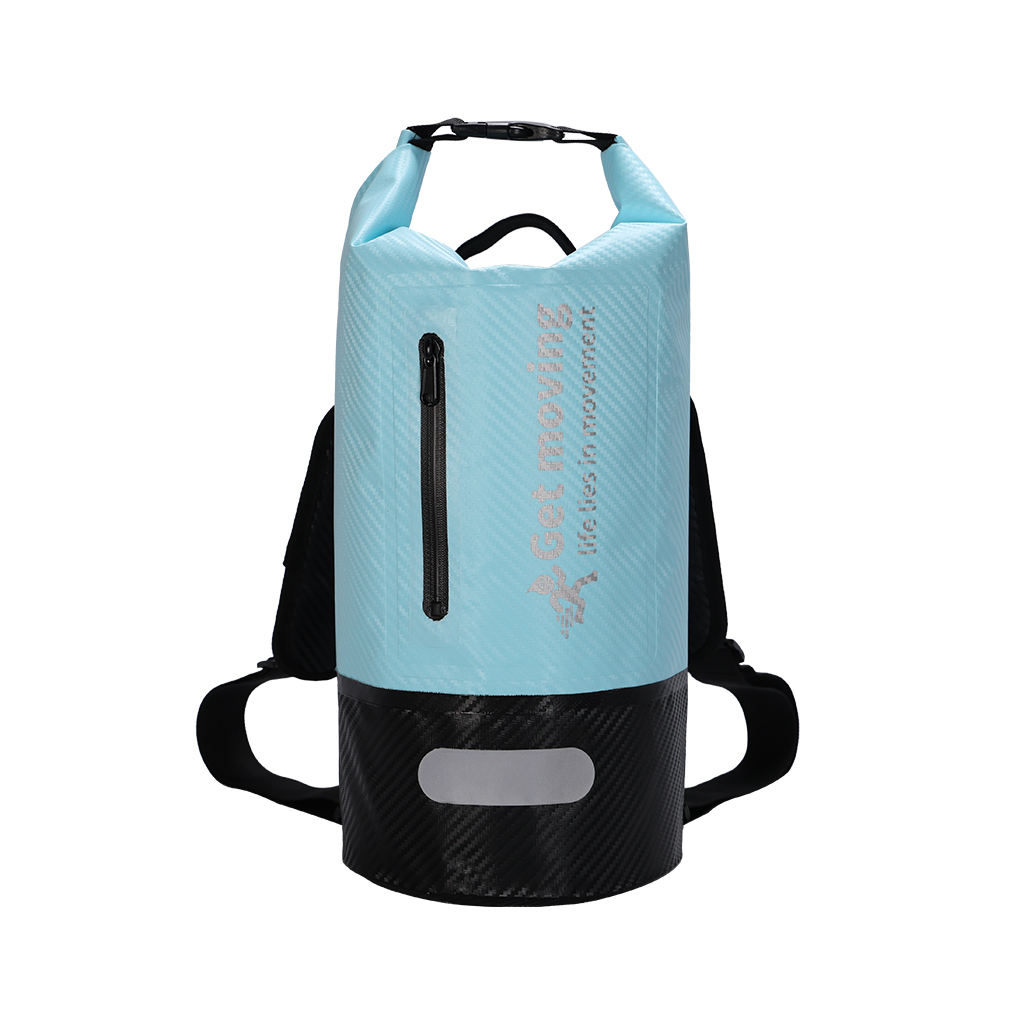
Use the selected model’s panel and attachment layout when numbering inspection locations. Compare Contrast-Base Textured Dry Bag and 20L gear-strap backpack. Discuss backpack construction and sample requirements.
Include these details in your enquiry
- Annotated construction drawing
- Seam locations and compartment boundaries
- Visual defect examples and acceptance rules
- Functional test sequence and batch sampling plan
Identify the model and the version of any drawing or artwork. Ask for assumptions, proposed changes, packing details and commercial terms to be shown in the quotation. MOQ, sample cost and production timing are confirmed for the agreed configuration.
Buyer questions
Should every attachment be inspected the same way?
No. A load-bearing strap anchor and a decorative patch can have different functions. Identify their roles and define appropriate checks.
Can a photo prove a bag will stay dry?
A photo documents appearance and construction. Functional performance needs a defined evaluation of the assembled product.
Welded seam sample review record
Use one row per seam location and specimen. Mark the closure, panel seam and strap attachment separately; do not treat them as equivalent test locations.
Download blank review record (CSV)
Blank buyer worksheet — no test results, certification or product approval are supplied in this file. Add your project-specific method and acceptance criteria with the supplier before reviewing the sample.
When the sample needs another review
| Observation | Why it matters | Next action |
|---|---|---|
| Unclear seam identification | A note such as “side seam” is difficult to reproduce across samples. | Mark the seam on a numbered photograph and repeat that location in the review record. |
| A visual difference without a functional decision | Appearance alone cannot establish the finished bag’s water protection. | Record the visual observation, then refer it to the separately agreed functional evaluation. |
| A revised material or welding setup | An earlier approval may no longer describe the revised specimen. | Record the revision and identify which locations and evaluations need repeating. |
Return to Waterproof backpack manufacturing and sample planning to select a product reference. Attach the completed record, sample photographs and revision number when requesting a sample review or quotation.
NEXT STEP
Turn the brief into a sample review.
Choose a product reference, mark the changes you need and send your expected quantities and destination market. Our Dongguan team can review the manufacturing options with you.
Discuss this project