
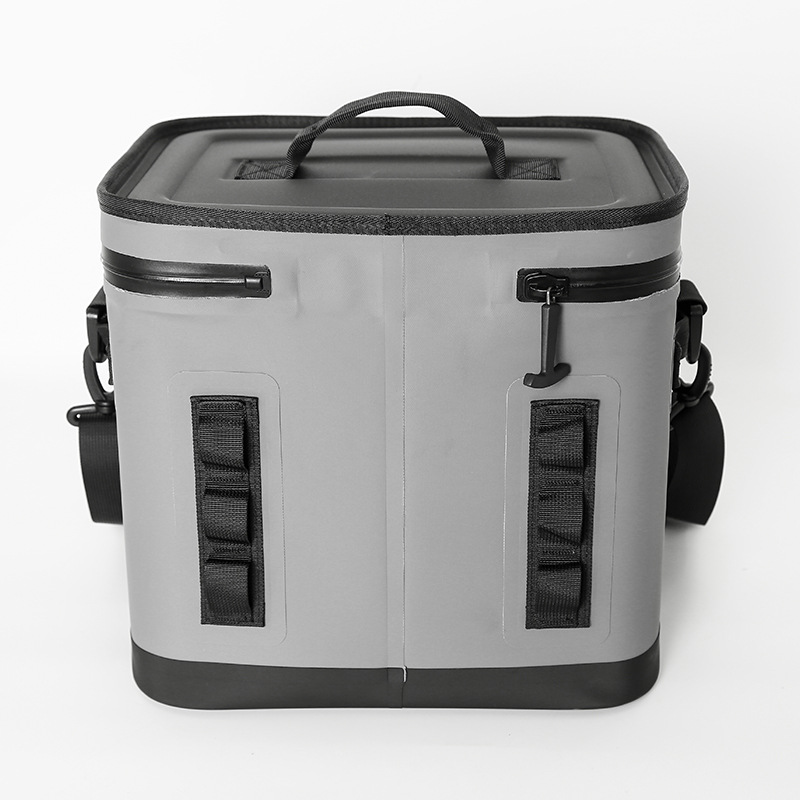
The purchasing decision
A wholesale soft cooler brief should describe how the customer will pack and carry it. A compact hinged-lid bag, a tall insulated tote and a cooler backpack have different access and handling characteristics. Begin with the contents, walking distance and intended setting, then choose the format that fits that use.
Review the shell, liner, insulation and closure as a complete system. A material described as waterproof does not establish the performance of the assembled cooler. Ask how seams and zipper ends are constructed and define the exposure or leak-resistance evaluation needed for the product. Keep exterior pocket claims separate from the main compartment.
Compare quotes using the same capacity basis, carry hardware and retail pack. If insulation performance matters, state a repeatable test scenario rather than copying an hours claim from an unrelated product. A written brief makes it easier to compare factories and to control the specification when the order moves from sample to production.
What to compare before ordering
| Decision | Review with the supplier | Purpose |
|---|---|---|
| Format | Lid cooler, tote or backpack. | Match access and carry needs. |
| Construction | Shell, liner, insulation and closure. | Evaluate the complete cooler. |
| Quote basis | Capacity, hardware and pack. | Compare equivalent specifications. |
Compare cooler formats against the intended contents
Build a contents reference before choosing between a tote, compact cooler and backpack. Include the container shapes, cooling media and expected opening pattern. Decide how the user will carry the packed cooler and where it will be placed. These details make a sample review more useful than comparing exterior photographs or capacity labels alone.
| Format decision | What to specify | What to inspect |
|---|---|---|
| Tote or shoulder carry | Packed weight, handle clearance and strap needs | Opening access and carrying balance. |
| Backpack carry | Load, adjustment and front storage | Fit with the intended packed contents. |
| Liner and insulation | Construction and thickness reference | Continuity around base, sides and lid. |
| Main closure | Access pattern and exposure requirement | Operation, corners and assembled construction. |
Keep insulation performance, liquid retention and external water exposure as separate requirements. An insulation layer does not establish a leakproof closure, and a water-resistant shell does not define a cooling duration. Send the required tests and destination market with the selected model so our team can discuss sample evidence and applicable documentation.
Compare custom and wholesale cooler references for the next stage of your purchasing brief.
Include these details in your enquiry
- Packed contents and carried load
- Preferred cooler format and capacity basis
- Closure and leak-resistance evaluation
- Insulation test scenario and retail packing
Identify the model and the version of any drawing or artwork. Ask for assumptions, proposed changes, packing details and commercial terms to be shown in the quotation. MOQ, sample cost and production timing are confirmed for the agreed configuration.
Buyer questions
Does a waterproof shell make a soft cooler leakproof?
The assembled liner, seams and closure also matter. Agree a complete-product evaluation for the intended orientation and use.
Can I compare suppliers using advertised cooling hours?
Only compare results obtained under the same stated conditions. Loading, temperature and opening frequency can change the result.
NEXT STEP
Turn the brief into a sample review.
Choose a product reference, mark the changes you need and send your expected quantities and destination market. Our Dongguan team can review the manufacturing options with you.
Discuss this project