
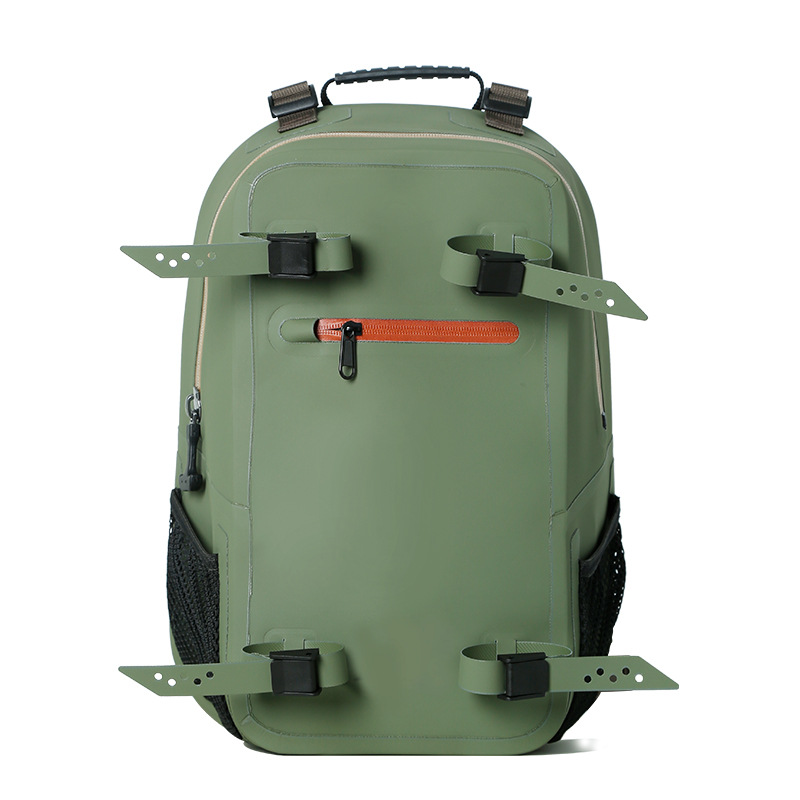
The purchasing decision
A 20L, 25L and 30L backpack comparison should start with the same equipment list. Ask how the items fit, what remains accessible and how the bag closes around the load. A larger nominal capacity does not automatically make one model the better choice if its body proportions or opening do not suit the contents.
Compare the carry system and exterior storage alongside volume. The 20L gear-strap reference, 25L adventure reference and 30L paddling reference have different layouts. Their pockets and attachment details should be evaluated for the intended activity, not treated as identical models offered in three sizes.
For a wholesale assortment, assign each capacity a clear customer role. Quote quantities by model and colour and keep capacity data separate from packaging dimensions. If a custom capacity is required, ask the supplier for a revised drawing and sample rather than changing the number in the product description while leaving construction unreviewed.
What to compare before ordering
| Decision | Review with the supplier | Purpose |
|---|---|---|
| Packing | Use one equipment list across models. | Compare usable fit and access. |
| Layout | Review harness, pockets and attachments. | Choose the activity-specific design. |
| Range role | Define customer and quantity per model. | Avoid capacity-only duplication. |
Use a repeatable packing trial to compare useful space
Choose a realistic contents set: clothing, equipment and any rigid items that the end customer needs to carry. Photograph and list those items before comparing bags. Pack each reference in the same sequence, allowing the closure to operate as intended. A nominal litre value is useful for sorting candidates, but it does not explain opening shape or the space used by a rolled closure.
| Trial step | Record | Why it matters |
|---|---|---|
| Contents set | Item list and dimensions of rigid objects | Keeps the comparison consistent. |
| Opening access | Largest item and insertion orientation | Shows whether the opening works in practice. |
| Correct closure | Roll sequence or zipper state | Prevents overfilling from distorting the result. |
| Loaded carrying | Pocket access and strap adjustment | Connects capacity with practical handling. |
Keep measured exterior dimensions, usable closed space and advertised capacity in separate fields. If the bag is intended for a laptop or specialist equipment, check that item’s actual size and position. Record any differences between the submitted sample and the proposed bulk version before approving the order; a similar litre label does not prove an identical internal layout.
Select a custom backpack structure for the next stage of your purchasing brief.
Include these details in your enquiry
- Common packed-equipment list
- Expected load and carry duration
- Model-specific pocket and harness needs
- Capacity basis and SKU quantity plan
Identify the model and the version of any drawing or artwork. Ask for assumptions, proposed changes, packing details and commercial terms to be shown in the quotation. MOQ, sample cost and production timing are confirmed for the agreed configuration.
Buyer questions
Are these three references one model in different sizes?
No. They illustrate different layouts as well as capacity labels. Review the construction of each.
Can package volume be used to rank backpack capacity?
No. Shipment packing and usable bag capacity are different measurements.
NEXT STEP
Turn the brief into a sample review.
Choose a product reference, mark the changes you need and send your expected quantities and destination market. Our Dongguan team can review the manufacturing options with you.
Discuss this project